
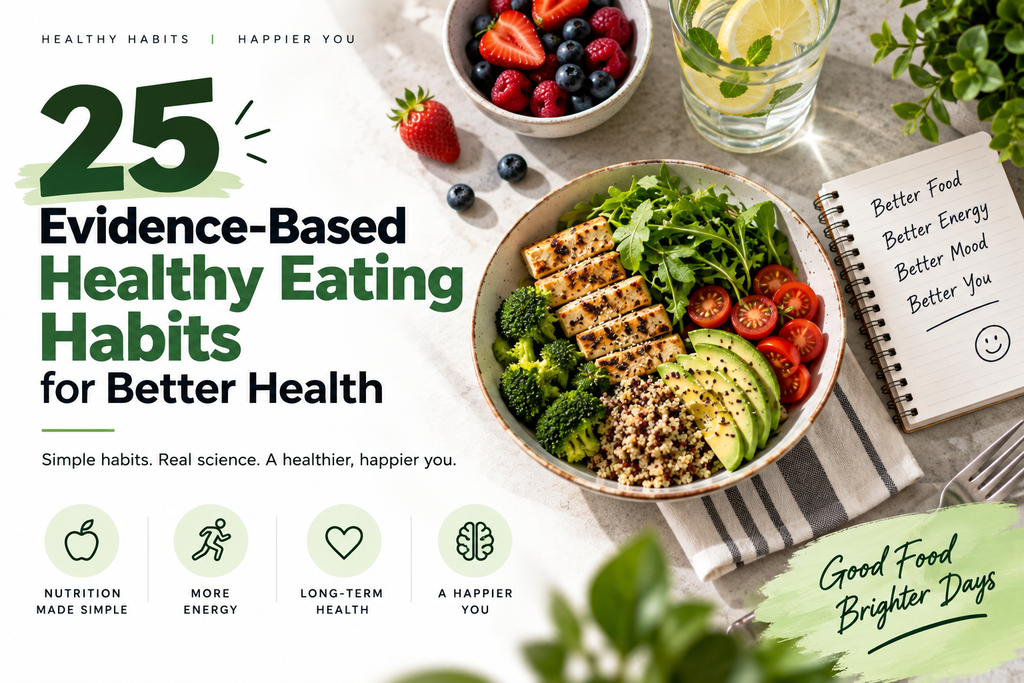
Building healthy eating habits isn’t about rigid diets or depriving yourself of the foods you love. Instead, it is about consistently making evidence-based choices that improve your physical and mental well-being over time. Focusing on whole foods, proper hydration, and mindful consumption yields the best results. These practices support your immune system, improve digestion, and protect against long-term concerns. Here are 25 science-backed healthy eating habits you can start implementing today for better overall health.
The Core Foundations of a Healthy Diet
To build a sustainable eating routine, start with the most nutrient-dense foods. These first five habits establish the bedrock of a well-balanced plate.
1. Prioritize Vegetables
Fill half your plate with non-starchy vegetables. They provide essential vitamins, minerals, and antioxidants.
2. Eat Whole Fruits
Choose whole fruits over juices. The natural fiber in whole fruit slows down digestion.
3. Choose Whole Grains
Swap refined grains for oats, brown rice, and quinoa. Whole grains retain their bran and germ.
4. Boost Daily Fiber
Boost your daily fiber intake to at least 25 to 30 grams. Fiber improves gut health and maintains regular digestion.
5. Incorporate Legumes
Beans, lentils, and chickpeas are incredibly nutrient-dense. They provide an inexpensive, versatile source of complex carbohydrates.
Protein, Fats, and Essential Nutrients
Balancing macronutrients ensures your body has the building blocks it needs for muscle repair and energy.
- 6. Select Quality Lean Proteins: Incorporate poultry, tofu, and eggs to support muscle maintenance without excess saturated fat.
- 7. Eat Fish Weekly: Aim for two servings of fatty fish like salmon or mackerel to boost your omega-3 intake.
- 8. Snack on Nuts and Seeds: A handful of almonds, walnuts, or chia seeds daily provides healthy fats and micronutrients.
- 9. Cook with Healthier Fats: Use olive oil or avocado oil instead of butter for heart-healthy monounsaturated fats.
- 10. Limit Saturated Fats: Reduce intake of fatty meats and heavy dairy to support long-term cardiovascular health.
What to Limit for Better Health
Knowing what to moderate is just as important as knowing what to eat. Small reductions in certain areas make a massive difference.
- 11. Cut Back on Added Sugar: Read labels carefully to avoid hidden sugars that contribute to inflammation and energy crashes.
- 12. Reduce Sodium Intake: Flavor foods with herbs, spices, and citrus instead of relying heavily on the salt shaker.
- 13. Minimize Ultra-Processed Foods: Limit packaged snacks and fast food, which often lack nutrients and contain artificial additives.
- 14. Rethink Your Drinks: Swap sugary sodas and sweetened teas for sparkling water or herbal tea.
- 15. Consume Alcohol in Moderation: If you drink, limit alcohol to recommended guidelines to protect your liver and metabolic health.
Hydration, Timing, and Mindfulness
How and when you eat deeply impacts digestion and satiety. Consider these habits to optimize your daily routine.
- 16. Drink Plenty of Water: Stay hydrated throughout the day. Often, our bodies mistake mild dehydration for hunger.
- 17. Eat a Rainbow of Foods: Including various colors of produce ensures you consume a wide spectrum of phytonutrients.
- 18. Practice Mindful Eating: Eat slowly and without distractions to better recognize your body’s natural fullness cues.
- 19. Optimize Meal Frequency: Find a regular eating schedule that prevents extreme hunger, whether that is three solid meals or smaller frequent meals.
- 20. Pay Attention to Meal Timing: Try to finish eating a few hours before bedtime to promote better sleep quality and digestion.
Practical Habits for Long-Term Success
Sustainable healthy eating requires practical systems. These final habits help make nutritious choices automatic.
- 21. Control Portion Sizes: Use smaller plates or pre-portion your meals to avoid unintentional overeating.
- 22. Cook More Meals at Home: Preparing your own food gives you complete control over ingredients, cooking methods, and portion sizes.
- 23. Plan Your Meals Ahead: Weekly meal planning reduces the temptation to order takeout when you are tired or busy.
- 24. Read Nutrition Labels: Look past marketing claims on the front of packages and check the actual ingredient list and nutrition facts.
- 25. Choose Sustainable Options: Opt for locally sourced, seasonal produce and sustainably caught seafood when possible to benefit both your health and the environment.
Frequently Asked Questions
How long does it take to form healthy eating habits?
Research shows it takes about 66 days for a behavior to become automatic. Start with small changes, like drinking more water, before overhauling your entire diet.
Do I need to eliminate my favorite treats entirely?
No. A healthy eating pattern leaves room for occasional treats. Striving for an 80/20 balance—eating nutrient-dense whole foods 80 percent of the time—is far more sustainable than strict deprivation.
Are all processed foods bad?
Not necessarily. Minimally processed items like canned beans, frozen vegetables, and whole-grain pasta are convenient, healthy choices. Focus on avoiding ultra-processed foods with long lists of artificial ingredients.