
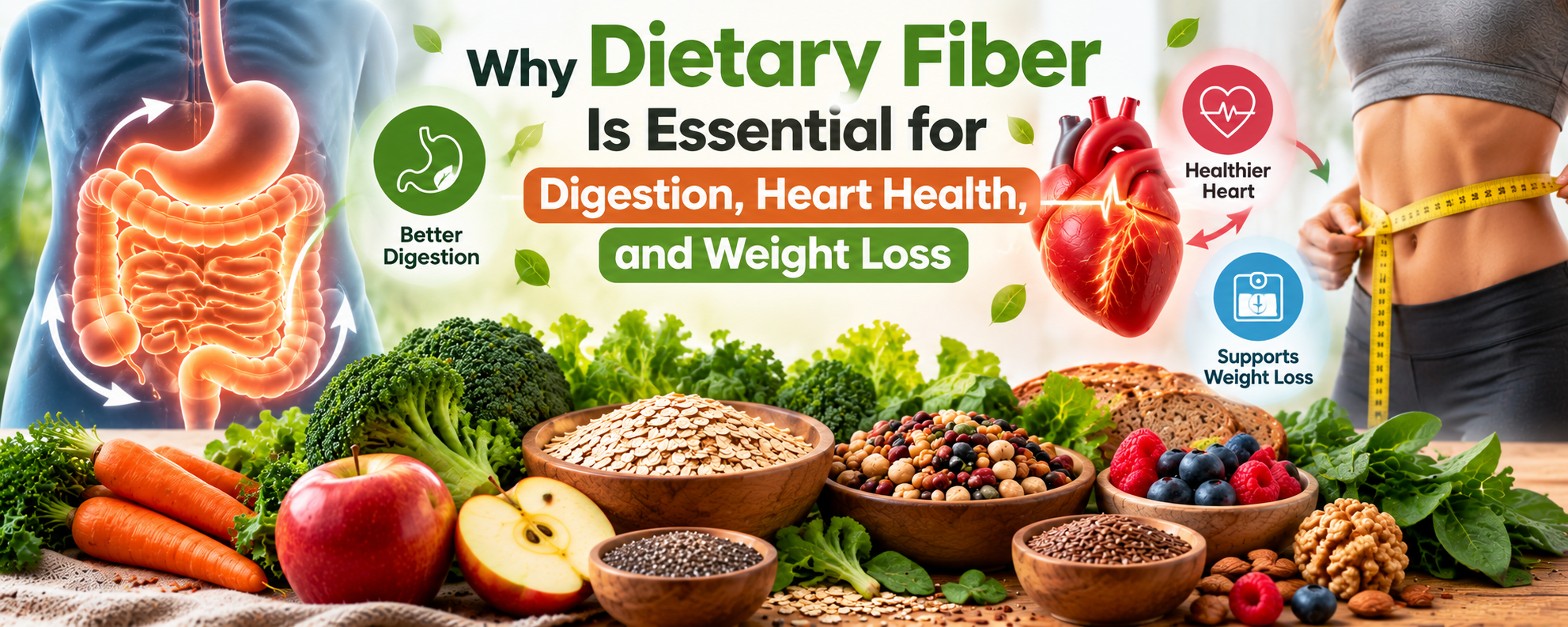
Dietary fiber is one of the simplest parts of a healthy diet to overlook. It does not provide the same quick energy as carbohydrates or the muscle-building reputation of protein, yet it plays a major role in digestion, bowel function, cholesterol management, blood sugar regulation, and appetite.
Dietary fiber is essential because it helps keep the digestive system functioning normally, supports a heart-healthy dietary pattern, and can make weight management easier. The best way to get it is through a varied diet built around vegetables, fruits, pulses, whole grains, nuts, and seeds rather than relying mainly on supplements or isolated “high-fiber” products.
The World Health Organization recommends that adults and children over 10 aim for at least 25 grams of naturally occurring dietary fiber each day. A major systematic review and meta-analysis published in The Lancet, which examined 185 prospective studies and 58 clinical trials, found that higher fiber intake was associated with better outcomes across several major health measures, with the greatest risk reductions generally observed around 25–29 grams per day. The researchers also found evidence that higher intakes may provide additional benefit.
What is dietary fiber?
Dietary fiber refers to carbohydrates and other plant components that are not completely broken down and absorbed in the small intestine. Instead, different types of fiber move through the digestive tract and can influence stool formation, digestion, nutrient absorption, and the activity of microbes in the large intestine.
Fiber is found naturally in plant foods, including:
- Vegetables
- Fruits
- Beans, lentils, chickpeas, and other pulses
- Whole grains such as oats, barley, brown rice, and whole wheat
- Nuts and seeds
Fiber is not one single substance with one effect. Its properties differ according to factors such as solubility, viscosity, fermentability, and the food in which it occurs. That is one reason eating a variety of fiber-rich foods is generally more useful than trying to find one “best” fiber source.
Why does your body need fiber?
Fiber matters because different types interact with the body in different ways. Some fibers add bulk to stool and help food move through the digestive tract. Some form gels and can affect digestion and cholesterol absorption. Others are fermented by gut microorganisms, producing compounds that can influence the intestinal environment.
In practical terms, a high-fiber eating pattern can help with:
- Regular bowel movements and stool consistency
- Feeling fuller after meals
- Maintaining a heart-healthy dietary pattern
- Managing blood cholesterol
- Supporting healthy blood glucose regulation
- Increasing the overall nutritional quality of the diet
These effects should not be interpreted as meaning that fiber is a treatment for every digestive or metabolic condition. Fiber is one component of an overall dietary pattern, and individual responses can vary.
How much fiber do you need per day?
For most adults, a useful general target is at least 25 grams of naturally occurring dietary fiber per day. WHO recommends this amount for adults and children aged 10 years and older. The guideline recommends at least 15 grams for children aged 2–5 and at least 21 grams for children aged 6–9. WHO’s 2023 carbohydrate guideline explains these recommendations in the context of carbohydrate quality and healthy food sources.
Individual needs can differ with age, sex, energy intake, activity level, and health circumstances. In some populations, higher intakes are reasonable and may be associated with additional health benefits.
A useful practical rule is not to obsess over a precise number at every meal. Instead, build several meals each day around naturally fiber-rich foods. The total will add up.
Why fiber is important for digestion
Digestive health is probably the benefit most people associate with fiber, and for good reason. Fiber can influence the amount and consistency of stool and can help support regular bowel movements.
Some fibers absorb or hold water, while others add physical bulk. This can make stools easier to pass for some people. Fermentable fibers also provide substrates that gut microorganisms can use.
For people with constipation, the evidence is particularly relevant. An updated systematic review and meta-analysis of 16 randomized controlled trials involving 1,251 adults found that fiber supplementation increased the likelihood of responding to treatment compared with control, with significant effects reported for psyllium and pectin. The review in the American Journal of Gastroenterology also noted that the effects can depend on the type of fiber used.
That last point matters. More fiber is not automatically better for everyone, especially if intake is increased suddenly. A person who jumps from a low-fiber diet to a very high-fiber diet may experience bloating, gas, abdominal discomfort, or changes in bowel habits.
Soluble vs insoluble fiber: what is the difference?
You may have heard that fiber is divided into soluble and insoluble fiber. This distinction is useful as a starting point, but it does not capture everything scientists now know about fiber.
| Type | What it generally does | Food examples |
|---|---|---|
| Soluble fiber | Can dissolve or swell in water and, for some types, form a viscous gel | Oats, barley, beans, lentils, some fruits |
| Insoluble fiber | Generally contributes to stool bulk and intestinal movement | Whole grains, vegetable skins, nuts, some seeds |
| Viscous fiber | Forms a thicker gel that can slow digestion and influence nutrient absorption | Psyllium, beta-glucan-rich foods |
| Fermentable fiber | Can be used by gut microorganisms | Many legumes, whole grains, vegetables, fruits |
Many foods contain multiple types of fiber, and the same food can have different physiological effects depending on how it is prepared and what else is eaten with it. So instead of trying to build a diet around one fiber category, eating a broad range of plant foods is usually the more practical strategy.
How fiber supports gut health
The large intestine contains a complex community of microorganisms, often called the gut microbiota. Certain fibers reach the colon relatively intact and can be fermented by these microorganisms.
This fermentation can produce short-chain fatty acids and other metabolites that interact with the intestinal environment. However, the science of the gut microbiome is still developing, and it would be misleading to promise that a particular fiber source will “fix” your gut microbiome.
The more established practical lesson is simpler: diets rich in varied plant foods provide many different types of fiber and other compounds that support a healthy dietary pattern.
Fiber and constipation: how to increase it without feeling worse
If your current diet is low in fiber, increase it gradually rather than suddenly adding huge amounts of bran, legumes, or fiber supplements.
A practical approach is:
- Add one fiber-rich food to a meal. For example, add oats at breakfast or lentils to lunch.
- Increase vegetables and fruit. Keep edible skins on where appropriate and practical.
- Swap refined grains for whole grains. Try oats, whole-wheat roti, barley, or brown rice.
- Add beans or lentils regularly. Pulses provide both fiber and protein.
- Increase gradually. Give your digestive system time to adapt.
- Pay attention to fluids. Adequate fluid intake can be important when increasing fiber, although individual fluid needs vary.
If constipation is persistent, severe, painful, associated with bleeding, unexplained weight loss, vomiting, or a major change in bowel habits, it is better to seek medical evaluation rather than assuming you simply need more fiber.
How fiber supports heart health
Fiber is closely associated with heart-healthy eating patterns. Whole grains, beans, vegetables, fruits, nuts, and seeds can increase fiber intake while also supplying vitamins, minerals, and other beneficial compounds.
The large 2019 Lancet systematic review and meta-analysis found that higher dietary fiber consumption was associated with lower risks of cardiovascular-related mortality and several noncommunicable diseases in prospective studies. The clinical trials included in the analysis also found reductions in body weight, systolic blood pressure, and total cholesterol when comparing higher and lower fiber intakes.
Because much of the long-term disease evidence comes from observational studies, these associations should not be interpreted as proof that fiber alone prevents disease. People who eat more fiber may also have healthier overall diets and lifestyles. However, the consistency of evidence across different study designs supports the broader recommendation to consume fiber-rich foods.
How soluble fiber can affect cholesterol
Some viscous soluble fibers can help lower LDL cholesterol by interfering with the reabsorption of bile acids in the digestive tract. The liver then uses cholesterol to make more bile acids, which can contribute to lower circulating LDL cholesterol.
Oats and barley are useful food examples because they contain beta-glucan, a type of soluble fiber. Psyllium is another well-studied viscous fiber.
This does not mean that eating a bowl of oats automatically “cleans your arteries.” Cholesterol management depends on the entire diet, genetics, physical activity, body weight, and, when necessary, medication. The American Heart Association continues to emphasize diets rich in vegetables, fruits, whole grains, legumes, and fiber as part of cardiovascular risk reduction. Its 2026 dietary guidance specifically describes heart-healthy dietary patterns as rich in fiber.
Fiber and blood sugar
Fiber-rich foods can also influence how quickly carbohydrates are digested and absorbed. Viscous fibers can slow gastric emptying and nutrient absorption, while intact plant foods often require more chewing and have a different structure from refined carbohydrates.
This is one reason a bowl of whole oats is metabolically different from a sugary beverage containing a similar amount of carbohydrate. The food matrix, fiber content, and processing all matter.
WHO’s guideline on carbohydrate intake emphasizes carbohydrate quality and recommends that carbohydrates come primarily from whole grains, vegetables, fruits, and pulses. Fiber is a major part of what makes these foods different from many refined carbohydrate products.
Can fiber help with weight loss?
Fiber can support weight loss, but it is not a weight-loss drug and it does not override calorie balance.
One reason fiber can help is satiety. Many high-fiber foods are relatively bulky and require more chewing, while some types of fiber slow digestion. This can make a meal more filling for its calorie content.
The American Heart Association notes that high-fiber foods can help people feel satisfied with fewer calories. Its practical guidance on fiber and weight management recommends using foods such as fruits, vegetables, beans, and whole grains as part of a healthy eating pattern.
Clinical evidence also supports a modest effect. A systematic review and meta-analysis of 62 randomized trials involving 3,877 participants found that viscous fiber supplementation produced small reductions in body weight, BMI, and waist circumference even without prescribed calorie restriction. The researchers described the effects as modest and highlighted uncertainty and the need for longer-term research.
The practical implication is more useful than the number: if you replace a low-fiber, calorie-dense snack with a meal built around vegetables, legumes, whole grains, fruit, or another fiber-rich food, you may find it easier to control hunger and total calorie intake.
Why high-fiber foods can make weight management easier
Imagine two lunches that contain similar calories. One is mostly refined starch and a sugary drink. The other includes lentils, vegetables, whole grains, and fruit.
The second meal typically provides more fiber and a greater volume of whole foods. It may take longer to eat and can be more filling. That does not guarantee weight loss, but it can make a calorie-controlled eating pattern easier to maintain.
This is also why “add fiber” is usually better advice than “take a fiber supplement for weight loss.” The goal is to improve the quality of the entire diet.
Best high-fiber foods to eat regularly
| Food group | Examples | Easy ways to use them |
|---|---|---|
| Pulses | Lentils, chickpeas, kidney beans, black beans | Dal, chana salad, rajma, soups, curries |
| Whole grains | Oats, barley, whole wheat, brown rice | Oatmeal, roti, grain bowls, porridge |
| Fruits | Apples, pears, oranges, berries, guava | Whole fruit as snacks or with meals |
| Vegetables | Carrots, peas, broccoli, leafy greens, beans | Curries, salads, soups, stir-fries |
| Nuts | Almonds, walnuts, peanuts, pistachios | Snacks, breakfast bowls, salads |
| Seeds | Chia, flax, pumpkin, sesame | Add to oats, yogurt, salads, or meals |
The American Heart Association recommends fruits, vegetables, whole grains, beans, nuts, and seeds as practical sources of fiber. Its guidance on whole grains and dietary fiber also notes that most refined grains contain little or no fiber compared with whole grains.
Whole grains vs refined grains
Whole grains contain the bran, germ, and endosperm of the grain. Refining removes the bran and germ, which substantially changes the fiber and nutrient profile.
Examples of whole grains include oats, barley, whole-wheat products, brown rice, and whole-grain corn products. White bread, many conventional crackers, and white rice are examples of refined grain products.
This does not mean refined grains are “poison.” They can fit into a varied diet. The issue is that relying heavily on refined grains can make it harder to reach an adequate fiber intake.
A simple upgrade is to replace some refined grains with whole grains rather than trying to eliminate all refined foods.
Does fruit contain enough fiber to count?
Yes. Whole fruit is a useful source of fiber, although the amount varies considerably by fruit.
Eating an orange, apple, pear, guava, or berries gives you the fruit’s natural fiber structure. Fruit juice is different because much of the fiber can be removed during processing, and it is easier to consume large amounts of liquid calories quickly.
WHO recommends that people older than 10 consume at least 400 grams of fruits and vegetables per day and at least 25 grams of naturally occurring dietary fiber. WHO’s updated guidance places these recommendations within a broader healthy dietary pattern.
Can you get enough fiber from a vegetarian diet?
Yes. In fact, many vegetarian foods are naturally rich in fiber. Lentils, chickpeas, beans, peas, whole grains, vegetables, fruits, nuts, and seeds can make it relatively straightforward to build a high-fiber vegetarian diet.
A simple Indian meal can provide fiber without requiring specialty foods. For example, dal with vegetables and whole-wheat roti, followed by whole fruit, can contribute fiber from several food groups at once.
For a vegetarian trying to build muscle, fiber-rich foods can coexist with a high-protein diet. The trick is to distribute them across meals rather than making every meal extremely bulky.
What happens if you suddenly eat too much fiber?
Increasing fiber too quickly can cause gas, bloating, abdominal discomfort, or changes in bowel movements. This is particularly common when someone suddenly adds large amounts of legumes, bran, or fiber supplements.
The solution is usually gradual rather than abandoning fiber. Increase portions progressively, vary your sources, and pay attention to how your body responds.
If you have a diagnosed digestive condition or have been advised to follow a specific fiber restriction, general dietary advice may not apply. In those situations, follow the guidance of your doctor or registered dietitian.
Should you take a fiber supplement?
Not necessarily. For most healthy people, food should be the starting point.
Fiber supplements can be useful in specific situations, particularly when a clinician recommends them or when a particular type of fiber is needed. Psyllium is one example with evidence for constipation and other applications.
But a supplement does not reproduce everything you get from eating vegetables, fruits, whole grains, pulses, nuts, and seeds. Whole foods also provide vitamins, minerals, protein, healthy fats, and thousands of other plant compounds.
If you use a fiber supplement, increase the dose cautiously and follow the product instructions. People taking medications should also ask a pharmacist or clinician whether the timing of a fiber supplement could affect medication absorption.
How to increase fiber without changing your entire diet
You do not need to turn every meal into a giant salad. A few consistent substitutions can make a substantial difference.
- Start breakfast with oats or another whole grain. Add fruit and seeds for more variety.
- Include dal, beans, or chickpeas daily. They are useful sources of both fiber and plant protein.
- Eat whole fruit instead of juice. This keeps more of the fruit’s fiber structure.
- Add vegetables to your main meals. Use several different colors across the week.
- Choose whole-grain versions more often. Try whole-wheat roti, oats, barley, or brown rice.
- Keep nuts and seeds available. Use sensible portions because they are energy-dense.
- Increase gradually. Your digestive system may need time to adapt.
A simple high-fiber day of eating
You can reach a meaningful fiber intake without relying on supplements. For example:
- Breakfast: oats with fruit and chia seeds
- Mid-morning: a whole fruit and a small serving of nuts
- Lunch: dal, vegetables, and whole-wheat roti
- Snack: roasted chickpeas or another pulse-based snack
- Dinner: mixed vegetables with beans or lentils and a whole grain
The exact fiber total depends on portion sizes and the specific foods used. The point is the structure: several plant foods throughout the day make adequate fiber much easier to achieve.
Common fiber mistakes
“More fiber is always better.”
Not necessarily. Fiber has important benefits, but very high intakes can cause digestive symptoms in some people. Individual tolerance matters.
“Fiber only matters if you are constipated.”
No. Fiber is relevant to bowel function, but research also links higher intake with cardiovascular and metabolic health outcomes.
“Fiber supplements are the same as eating vegetables.”
No. A supplement can provide a particular type of fiber, but whole plant foods provide a much broader range of nutrients and food components.
“Fruit is too high in sugar to be a good fiber source.”
Whole fruit contains natural sugars along with fiber, water, vitamins, minerals, and other plant compounds. Whole fruit and fruit juice should not be treated as nutritionally identical.
“White rice has no place in a healthy diet.”
That is too absolute. White rice is a refined grain and generally provides less fiber than brown rice, but it can still be part of a balanced diet. Pairing it with vegetables, pulses, and other fiber-rich foods improves the overall meal.
Fiber, calories, and the weight-loss misconception
Fiber can make weight management easier, but it is important not to turn it into another diet myth. Eating fiber does not make calories disappear.
Nuts and seeds, for example, contain useful fiber but are also calorie-dense. Dried fruit contains fiber but can be easy to overeat. Some packaged “high-fiber” foods are still high in calories, added sugar, or saturated fat.
For weight loss, the better strategy is to use fiber to improve food choices and satiety while maintaining an appropriate overall energy intake.
This interpretation is consistent with the evidence. The Lancet analysis found lower body weight in clinical trials comparing higher and lower fiber intake, while randomized trials of viscous fiber supplementation show relatively modest changes in body weight. The evidence supports a useful role for fiber, not a magic effect.
When should you speak to a healthcare professional?
Most people can safely work toward a higher-fiber diet through food. However, digestive symptoms should not automatically be blamed on low fiber.
Talk with a healthcare professional if you have persistent constipation or diarrhea, blood in the stool, unexplained weight loss, persistent abdominal pain, repeated vomiting, difficulty swallowing, or a significant unexplained change in bowel habits.
People with certain gastrointestinal conditions may also need individualized advice about the amount and type of fiber they consume.
Frequently asked questions
How much fiber should I eat per day?
WHO recommends at least 25 grams of naturally occurring dietary fiber per day for adults and children aged 10 years and older. Individual needs can vary, and some evidence suggests additional benefits at higher intakes.
What are the best foods for fiber?
Beans, lentils, chickpeas, vegetables, fruits, whole grains, nuts, and seeds are among the best everyday sources. Eating a variety is more useful than relying on a single food.
Can fiber help you lose belly fat?
Fiber does not specifically target belly fat. However, high-fiber foods can improve fullness and make it easier to manage overall calorie intake. Some clinical trials of viscous fiber have found modest reductions in body weight and waist circumference.
Does fiber help lower cholesterol?
Yes, certain viscous soluble fibers can help lower LDL cholesterol. Oats, barley, and psyllium are examples of fiber sources with this property. The effect depends on the type and amount of fiber and should be considered alongside the rest of the diet.
Is it better to get fiber from food or supplements?
Food is generally the preferred starting point because whole plant foods provide fiber together with other nutrients and beneficial compounds. Supplements can be useful in specific situations, but they should not be viewed as a replacement for a varied diet.
Can too much fiber cause bloating?
Yes. A sudden increase in fiber can cause gas, bloating, and abdominal discomfort. Increasing intake gradually can make the transition easier.
Is fiber good for digestion?
Yes. Fiber can increase stool bulk, influence stool consistency, and support regular bowel movements. Certain fibers are also fermented by gut microorganisms.
Can you get enough fiber on a vegetarian diet?
Yes. Pulses, whole grains, vegetables, fruits, nuts, and seeds can provide plenty of fiber. A varied vegetarian diet can make meeting fiber targets quite practical.
The bottom line
Dietary fiber is not a niche nutrition ingredient. It is a fundamental part of a healthy eating pattern.
For digestion, fiber supports normal bowel function and can be particularly useful for constipation. For heart health, higher fiber intake is associated with better cardiovascular outcomes, and certain soluble fibers can help lower LDL cholesterol. For weight management, high-fiber foods can improve fullness and may make it easier to maintain an appropriate calorie intake.
The easiest way to get enough is to stop thinking about fiber as something you need to “add” separately. Build meals around the foods that naturally contain it: vegetables, fruits, pulses, whole grains, nuts, and seeds. Increase intake gradually if your current diet is low in fiber, and focus on variety rather than chasing a single number or supplement.
SEO Information
Primary Keyword
dietary fiber benefits
Secondary Keywords
- benefits of dietary fiber
- dietary fiber for digestion
- fiber for heart health
- fiber for weight loss
- high fiber foods
- how much fiber per day
- soluble vs insoluble fiber
- foods high in fiber
- fiber and cholesterol
- fiber and constipation
- fiber for gut health
- best sources of dietary fiber
Search Intent
Informational with practical health and nutrition guidance. The reader wants to understand why fiber matters, how much they need, which foods provide it, and how it can affect digestion, cardiovascular health, and weight management.
Target Audience
Health-conscious adults, people trying to improve digestion or manage weight, beginners learning about nutrition, and active or vegetarian readers looking for practical high-fiber food choices.
Content Angle
Move beyond the simplistic “fiber keeps you regular” message. Explain how different types of fiber work, connect the evidence to digestion, heart health and satiety, and give readers a practical food-first framework for increasing fiber without overdoing it.