
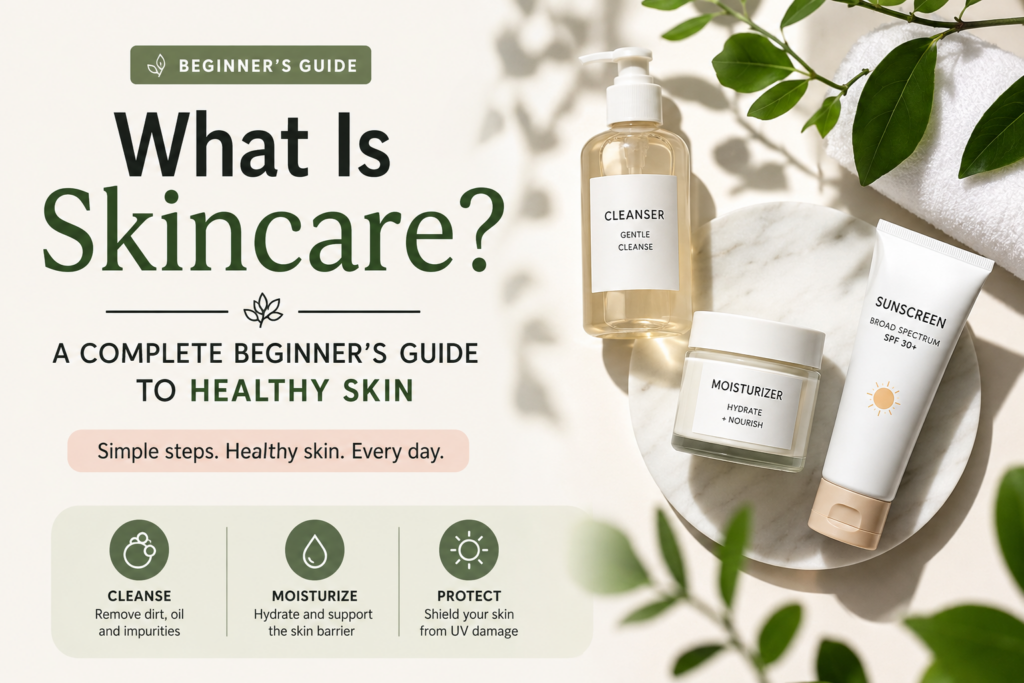
Skincare is the practice of caring for your skin to keep it clean, hydrated, protected, and healthy. A basic skincare routine usually involves three essential steps: cleansing, moisturizing, and protecting the skin from the sun.
You do not need a complicated 10-step routine to have healthy skin. Dermatologists generally emphasize using products that match your skin’s needs and being consistent with simple, evidence-based habits. The American Academy of Dermatology (AAD) notes that consistency can matter more than using a large number of products.
Why Is Skincare Important?
Your skin is continuously exposed to environmental factors such as sunlight, pollution, temperature changes, sweat, microorganisms, and physical irritation.
- Remove dirt, excess oil, sweat, and other debris
- Maintain skin hydration
- Support the skin barrier
- Reduce irritation and dryness
- Manage certain skin concerns
- Protect against UV-related skin damage
- Reduce the appearance of premature skin aging
The CDC states that most skin cancers are caused by excessive exposure to ultraviolet (UV) radiation from the sun, tanning beds, or sunlamps. UV exposure can also contribute to premature skin aging and changes in skin texture. CDC: Skin Cancer Risk Factors
What Is Skincare?
Skincare refers to the daily habits and products used to maintain the health and appearance of your skin.
- Washing your skin with an appropriate cleanser
- Applying moisturizer to maintain hydration
- Using sunscreen to protect against ultraviolet (UV) radiation
- Treating specific concerns such as acne, dryness, or pigmentation
- Avoiding habits that can damage the skin
- Monitoring your skin for unusual or changing spots
Skincare is not only about making your skin look better. Your skin is the body’s largest organ and serves as a protective barrier between your body and the outside environment.
How Does Skin Work?
Understanding the basics of skin biology makes skincare easier to understand. The skin has several layers, with the two major layers being the epidermis and dermis.
Epidermis
The epidermis is the outer layer of the skin. It provides much of the skin’s protective function and contains cells involved in pigmentation and skin renewal.
Dermis
The dermis lies underneath the epidermis. It contains structures such as blood vessels, nerves, hair follicles, and glands.
The skin also contains natural lipids and other components that help maintain its barrier function and reduce excessive water loss. This is one reason harsh cleansing, excessive exfoliation, and using too many irritating products can be counterproductive.
What Are the Different Skin Types?
There is no single skincare routine that works equally well for everyone. Understanding your skin type can help you select appropriate products.
Normal Skin
Normal skin is generally balanced, comfortable, and not particularly oily or dry. It is usually not highly sensitive to skincare products.
Dry Skin
Dry skin may feel tight, rough, flaky, or itchy. It often benefits from gentle cleansing and richer moisturizers.
Oily Skin
Oily skin tends to produce more sebum, making the skin appear shiny or greasy. People with oily or acne-prone skin may benefit from lightweight, non-comedogenic products.
Combination Skin
Combination skin has both oily and dry areas. A common pattern is an oily forehead, nose, and chin, known as the T-zone, combined with drier areas elsewhere.
Sensitive Skin
Sensitive skin may sting, burn, itch, or become red after using certain products.
Skin type can change over time because of age, climate, hormones, medications, lifestyle, and skincare products.
What Are the Essential Skincare Products?
A beginner does not need dozens of products. A basic routine can be built around three categories:
- Cleanser
- Moisturizer
- Sunscreen
1. Cleanser
A cleanser removes substances such as dirt, sweat, excess oil, sunscreen, makeup, and environmental debris. Choose a gentle cleanser appropriate for your skin type.
Avoid assuming that a cleanser is better simply because it makes your skin feel extremely tight or ‘squeaky clean.’ Excessive cleansing or harsh products can irritate the skin.
2. Moisturizer
Moisturizer helps maintain skin hydration and can reduce dryness and irritation. Even oily or acne-prone skin may benefit from moisturizer.
- Dry skin may benefit from creams or ointments.
- Oily skin may prefer lightweight gels or lotions.
- Acne-prone skin can look for ‘non-comedogenic’ or ‘won’t clog pores.’
- Sensitive skin may benefit from fragrance-free formulas.
3. Sunscreen
Sunscreen is one of the most important parts of a daytime skincare routine. Look for a broad-spectrum sunscreen with SPF 30 or higher, particularly when spending time outdoors.
- Sunburn
- Premature skin aging
- Dark spots and pigmentation changes
- DNA damage
- Skin cancer
The CDC recommends combining sunscreen with other protective measures such as shade, protective clothing, hats, and sunglasses.
What Is a Simple Skincare Routine for Beginners?
Morning Skincare Routine
- Cleanse: Wash your face using a gentle cleanser appropriate for your skin.
- Moisturize: Apply moisturizer if your skin needs it.
- Sunscreen: Apply broad-spectrum SPF 30 or higher before going outdoors.
Simple formula: Cleanser → Moisturizer → Sunscreen
Nighttime Skincare Routine
- Cleanser
- Treatment, if needed
- Moisturizer
If you use a specific treatment recommended by a dermatologist, apply it according to the product instructions or your dermatologist’s advice.
Do You Need a 10-Step Skincare Routine?
No. A longer skincare routine is not automatically better. Using too many products can increase the likelihood of irritation, especially when multiple active ingredients are introduced at the same time.
For most beginners, establish a routine with cleanser, moisturizer, and sunscreen before considering additional products.
What Are Skincare Actives?
Skincare ‘actives’ are ingredients used to address specific skin concerns.
Salicylic Acid
Commonly used in products designed for acne-prone skin and clogged pores.
Benzoyl Peroxide
An established acne treatment ingredient.
Retinoids
Retinoids, including retinol and prescription retinoids, are used for several dermatological purposes, including acne and photoaging.
Vitamin C
Commonly included in skincare products designed to provide antioxidant benefits and address uneven skin tone.
Hyaluronic Acid
A humectant commonly used in moisturizers and hydrating products.
Ceramides
Lipids used in many moisturizers that can help support the skin’s moisture barrier.
Beginner tip: Do not start several active ingredients at once. Introduce products gradually so you can identify what works for your skin and what causes irritation.
How Should You Choose Skincare Products?
Your Skin Type
Choose products designed for dry, oily, combination, sensitive, or acne-prone skin.
Your Primary Concern
Your routine should have a purpose. For example: acne → acne-friendly cleanser and appropriate acne treatment; dryness → moisturizer and gentle cleanser; sun protection → broad-spectrum sunscreen; uneven pigmentation → sunscreen plus appropriate treatment; sensitive skin → gentle, fragrance-free products.
The Ingredient List
Look beyond marketing claims. For acne-prone skin, terms such as ‘non-comedogenic’ and ‘won’t clog pores’ can be useful. For sensitive skin, fragrance-free products may be preferable.
Your Budget
Effective skincare does not have to be expensive. Appropriate products and consistent habits matter more than assuming expensive products are necessary.
Common Skincare Mistakes Beginners Make
Washing Your Face Too Often
More washing does not necessarily mean cleaner or healthier skin. Excessive washing can irritate the skin and may worsen acne in some people.
Scrubbing Too Hard
Physical scrubbing can irritate the skin. Gentle cleansing with your fingertips is usually preferable to aggressive scrubbing.
Skipping Moisturizer Because You Have Oily Skin
Oily skin can still become dehydrated or irritated. If conventional moisturizers feel heavy, consider a lightweight, non-comedogenic formulation.
Skipping Sunscreen
UV exposure accumulates over time, and sun protection is important even when the weather is cool or cloudy.
Changing Products Too Frequently
Constantly switching products makes it difficult to determine what is helping or irritating your skin.
Picking or Popping Pimples
Picking acne can increase inflammation and raise the risk of scarring and post-inflammatory hyperpigmentation.
How Long Does It Take to See Skincare Results?
Skincare results depend on the product, skin concern, severity of the problem, and individual response. Some products may provide an immediate feeling of hydration, while improvements in acne, pigmentation, or signs of aging can take considerably longer.
For acne, the AAD notes that people may need several weeks to see improvement, while complete clearing can take several months with appropriate treatment.
The key principle is: Do not judge a skincare routine after only a few days. Consistency matters.
What Does Research Say About Sun Protection?
Sun protection has some of the strongest evidence behind it in basic skincare. The CDC states that most skin cancers are associated with excessive UV exposure and recommends reducing exposure through shade, protective clothing, hats, sunglasses, and sunscreen.
The CDC also notes that sunburn is evidence of UV-related skin injury and that sunburns increase skin cancer risk. This makes sunscreen more than a cosmetic product. It is an important preventive health measure. CDC: Preventing Sunburn
Is Skincare Different for Men and Women?
The basic principles of healthy skin are largely the same regardless of sex. Both men and women can benefit from gentle cleansing, appropriate moisturization, sun protection, products suited to their skin type, and treatment for specific skin conditions.
Individual needs can differ because of factors such as shaving, hormones, medications, skin type, and specific dermatological conditions.
When Should You See a Dermatologist?
- Persistent or severe acne
- Painful or deep acne
- Significant acne scarring
- Persistent itching or irritation
- A rash that does not improve
- Severe or persistent dryness
- A changing mole or unusual skin growth
- A wound or sore that does not heal
- A spot that changes, bleeds, or looks significantly different from surrounding spots
Skincare products are useful for everyday maintenance, but they cannot replace medical treatment for every skin condition.
A Beginner’s Skincare Checklist
- Identify your skin type
- Buy a gentle cleanser
- Choose an appropriate moisturizer
- Use broad-spectrum SPF 30+ sunscreen during the day
- Avoid aggressive scrubbing
- Avoid constantly changing products
- Introduce active ingredients gradually
- Do not pick or squeeze acne
- Protect your skin from excessive UV exposure
- See a dermatologist for persistent or concerning skin problems
The Bottom Line: Start Simple and Stay Consistent
Skincare does not need to be complicated. For most beginners, the best starting point is a simple routine built around gentle cleansing, appropriate moisturizing, and consistent sun protection.
Once you understand your skin type and identify a specific concern, you can gradually introduce targeted products or treatments.
The goal should not be to use the maximum number of skincare products. The goal is to develop a routine that is safe, practical, evidence-informed, and sustainable enough to follow consistently.
If your skin develops persistent acne, severe irritation, unusual growths, changing moles, or other concerning symptoms, seek advice from a qualified dermatologist rather than relying solely on cosmetic skincare products.
Content note: This article is educational content and is not a substitute for individualized medical advice.
Frequently Asked Questions About Skincare
What is skincare in simple words?
Skincare is the practice of taking care of your skin through habits and products such as cleansing, moisturizing, sun protection, and targeted treatments.
What are the 3 basic steps of skincare?
The three basic steps are cleansing, moisturizing, and sun protection. Sunscreen is primarily a daytime step.
What skincare should a beginner use?
A beginner can start with a gentle cleanser, moisturizer, and broad-spectrum SPF 30+ sunscreen. Additional treatments can be added later based on specific skin concerns.
Is skincare really necessary?
A basic skincare routine can help maintain skin cleanliness, hydration, and protection. Sun protection is particularly important because excessive UV exposure can damage skin and increase skin cancer risk.
Can I have healthy skin without expensive skincare products?
Yes. Healthy skincare does not require expensive products. Consistent basic habits, appropriate products, and sun protection are more important than having a large collection of products.
Should oily skin use moisturizer?
Yes. Oily skin can still benefit from moisturizer. If you are prone to breakouts, consider a lightweight, oil-free or non-comedogenic moisturizer.
How often should I wash my face?
For many people, washing the face twice a day is sufficient. People with dry or sensitive skin may need a gentler or less frequent approach. Washing after significant sweating can also be useful.
Is sunscreen really necessary every day?
Sun protection is important whenever you are exposed to UV radiation. The AAD recommends broad-spectrum SPF 30+ sunscreen, while the CDC recommends combining sunscreen with shade and protective clothing when appropriate.
How long does it take for skincare to work?
It depends on the product and the skin concern. Hydration may improve quickly, while concerns such as acne, pigmentation, and signs of aging generally require longer-term consistent care.
Can skincare remove acne permanently?
Skincare can help manage acne, but there is no single routine that permanently eliminates acne for everyone. Persistent, severe, painful, or scarring acne may require professional dermatological treatment.
What is the most important skincare product?
For basic preventive skincare, sunscreen is one of the most important products because UV exposure contributes to skin damage and skin cancer risk. A gentle cleanser and moisturizer are also foundational parts of a basic routine.