
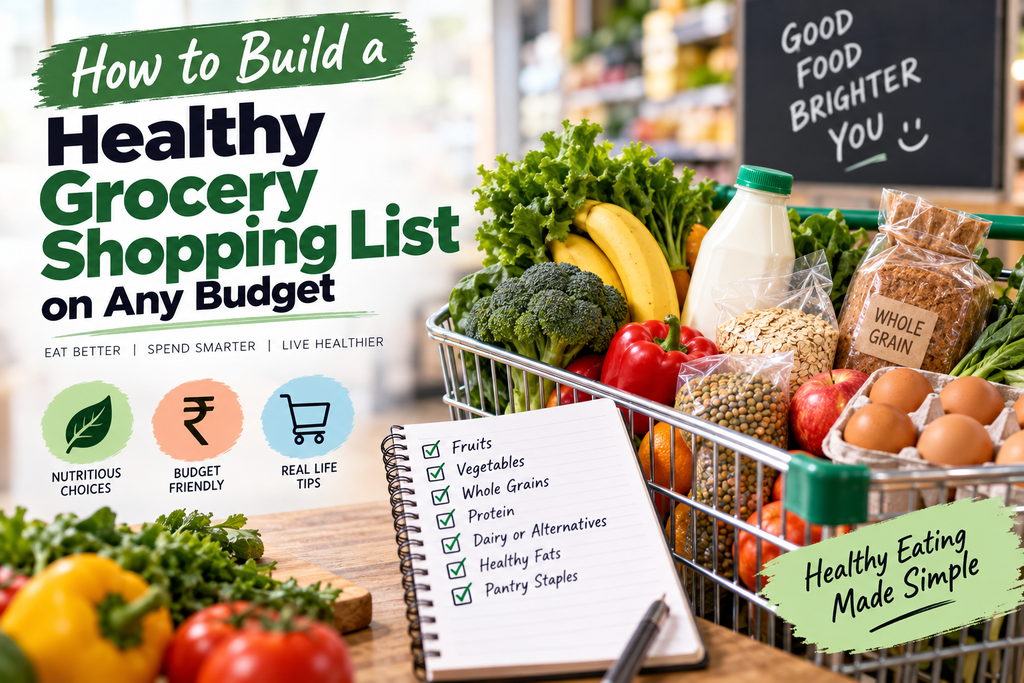
Eating healthy does not require a premium grocery bill. It does require planning, realistic choices, and a grocery list built around foods that provide good nutrition and can be used across several meals.
The goal is not to buy the most expensive version of every “healthy” food. It is to create a basket of nutritious, flexible ingredients that fit your budget and your household’s needs.
1. Set Your Grocery Budget First
Start with the maximum amount you can spend before making your list. Then divide the budget between vegetables and fruit, protein foods, grains and starches, dairy or alternatives, pantry staples, healthy fats, and a small flexible allowance.
Your allocation will depend on household size, dietary preferences, local prices, and the food you already have. Give every part of your budget a job before you shop.
2. Check Your Kitchen Before Shopping
Look through your refrigerator, freezer, pantry, cupboards, and spice rack. Identify ingredients that need to be used soon, such as rice, oats, eggs, lentils, beans, frozen vegetables, pasta, peanut butter, and sauces.
Shop your kitchen first, then shop the supermarket.
Buying duplicate ingredients can increase spending and lead to food waste.
3. Plan Meals Before Choosing Foods
Instead of writing isolated items such as rice, vegetables, yogurt, and bananas, connect them to meals. Examples include lentil curry with rice, vegetable omelets, oatmeal with banana, yogurt with fruit, vegetable pasta, and rice bowls.
Choose ingredients that can appear in several meals. Onions, carrots, tomatoes, lentils, rice, eggs, and frozen vegetables are useful because they can be combined in many ways.
4. Prioritize Affordable Nutrient-Dense Foods
Protein foods
- Beans and lentils
- Chickpeas and peas
- Eggs
- Milk and plain yogurt
- Cottage cheese
- Peanut butter
- Nuts and seeds
Carbohydrate sources
- Oats
- Rice
- Potatoes
- Whole-grain or regular pasta
- Barley
- Whole-wheat bread
Fruits and vegetables
Prioritize seasonal, locally available, discounted, frozen, or long-lasting produce. Bananas, apples, oranges, carrots, cabbage, onions, tomatoes, potatoes, spinach, peas, and frozen mixed vegetables can all be practical choices.
5. Do Not Assume Fresh Is Always Better
Fresh, frozen, and canned foods can all fit into a nutritious diet. Frozen vegetables may reduce spoilage, while canned beans can save preparation time. Compare labels and choose options without excessive added sugar or sodium when possible.
The best choice is nutritious food that you will actually use.
6. Compare Unit Prices
A larger package or sale sticker is not automatically the best value. Compare the price per kilogram, litre, or other standard unit. However, remember that the cheapest unit price is not useful if your household cannot finish the package before it spoils.
A practical definition of value is:
Useful food consumed ÷ money spent
7. Choose Flexible Ingredients
Build your list around categories rather than rigid products. Instead of “buy broccoli,” choose two or three vegetables based on seasonality, availability, and price. Instead of naming one fruit, choose two fruits for breakfasts and snacks.
This approach allows you to respond to real supermarket prices without abandoning your meal plan.
8. Use the Base + Protein + Produce Formula
One simple way to build affordable meals is:
- Base: rice, oats, pasta, potatoes, or bread
- Protein: lentils, beans, eggs, yogurt, or another suitable protein
- Produce: vegetables or fruit
Add inexpensive flavor builders such as garlic, onions, herbs, spices, lemon, vinegar, tomato products, or chili.
9. Plan Leftovers
Leftovers should be part of your grocery strategy. Before cooking, decide where each portion will go: dinner, lunch tomorrow, another meal, or the freezer. Food that gets thrown away is money that has already been spent.
10. Avoid Expensive “Health” Products by Default
Protein cookies, specialty cereals, premium granola, superfood powders, functional drinks, and expensive supplements may have a place in some diets, but they are not requirements for healthy eating. Basic foods such as vegetables, fruit, grains, legumes, eggs, dairy, nuts, and seeds can form a strong nutritional foundation.
Example Budget Grocery List
Protein
- Eggs
- Lentils
- Beans
- Chickpeas
- Plain yogurt
- Milk
- Peanut butter
Vegetables
- Onions
- Carrots
- Cabbage
- Tomatoes
- Spinach
- Frozen mixed vegetables
Fruit
- Bananas
- Apples
- Oranges
- Seasonal fruit
Grains and staples
- Oats
- Rice
- Whole-wheat bread
- Pasta
- Potatoes
A Simple 15-Minute Grocery List System
- Check your kitchen.
- Set your maximum budget.
- Choose several breakfasts, lunches, and dinners.
- Identify ingredients that overlap across meals.
- Select affordable protein sources.
- Choose fresh, frozen, and shelf-stable produce.
- Add grains, dairy or alternatives, oils, and seasonings.
- Compare unit prices and brands.
- Remove items that are unnecessary or unlikely to be eaten.
- Keep a small buffer for price changes.
Final Takeaway
A healthy grocery shopping list does not need to be perfect. It needs to be realistic, flexible, and repeatable. Start with vegetables and fruit, protein, whole or minimally processed grains, healthy fats, and foods you already know how to prepare.
Plan meals, buy ingredients with multiple uses, compare unit prices, use frozen and shelf-stable foods strategically, and plan leftovers. The best grocery list is the one that helps you create nutritious meals without spending more than you can afford.
FAQs
What are the cheapest healthy foods to buy?
Common budget-friendly choices include beans, lentils, eggs, oats, rice, potatoes, seasonal vegetables, bananas, frozen vegetables, and canned beans.
Is fresh, frozen, or canned produce cheapest?
There is no universal winner. Prices vary by location, season, brand, and package size. Compare unit prices and consider storage life and food waste.
How can I stop wasting groceries?
Buy quantities your household can consume, use highly perishable ingredients first, freeze suitable foods, and deliberately plan leftovers.
Are expensive health foods necessary?
No. A nutritious diet can be built around ordinary foods such as vegetables, fruit, grains, legumes, eggs, dairy, nuts, and seeds.