
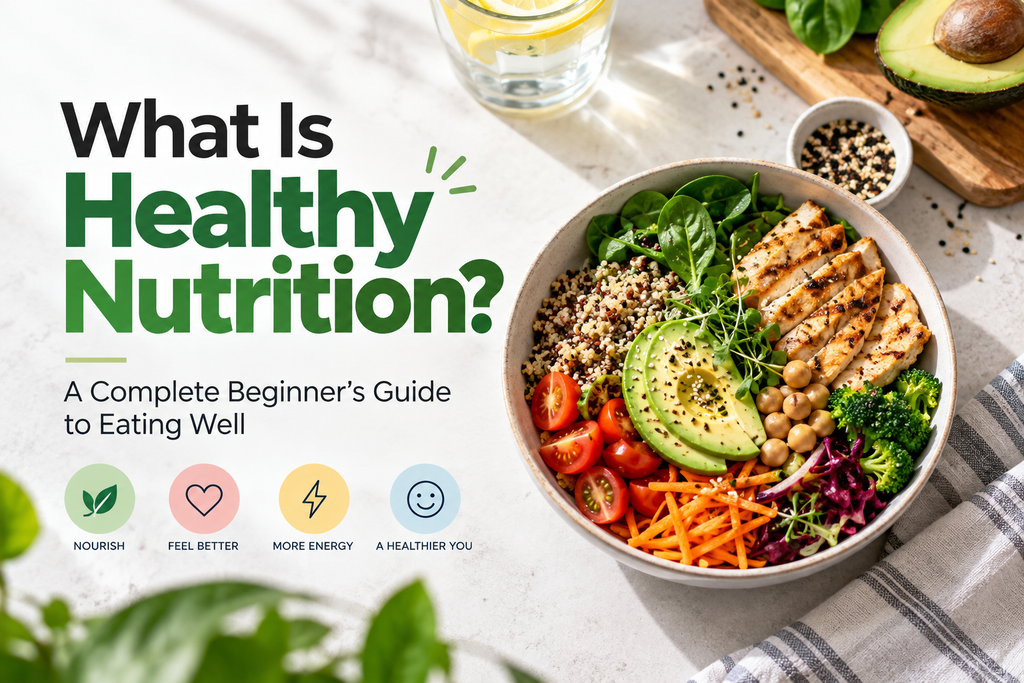
Healthy nutrition is not a strict diet, a list of superfoods, or a rule that says you can never enjoy pizza, sweets, or your favorite snack. It means consistently giving your body enough energy and nutrients through a varied diet while keeping foods and nutrients associated with poorer health in reasonable amounts.
The World Health Organization describes a healthy diet through four principles: adequacy, balance, moderation, and diversity. A healthy diet can look different depending on your culture, budget, activity level, preferences, and lifestyle. Dal, roti, rice, vegetables, fruit, curd, eggs, beans, nuts, and other familiar foods can all be part of nutritious eating.
Why Does Healthy Nutrition Matter?
Food supplies the raw materials your body needs to function. Protein supports muscle repair and tissue maintenance. Carbohydrates provide energy. Dietary fats support cell function and help the body absorb certain vitamins. Vitamins, minerals, and fiber support processes ranging from bone health and digestion to immunity and energy metabolism.
Over time, overall dietary quality can influence body weight, cardiovascular health, blood sugar regulation, and the risk of several chronic diseases. The most important factor is usually your overall eating pattern, not one individual food.
The Six Building Blocks of a Healthy Diet
1. Protein
Protein is needed for muscles, skin, enzymes, hormones, and tissue repair. Sources include eggs, milk, yogurt, paneer, dal, chickpeas, rajma, soy foods, nuts, seeds, fish, and lean meats. Try to include a meaningful protein source in your meals, especially if you exercise or want to preserve muscle.
2. Carbohydrates
Carbohydrates are an important source of energy. Rice, roti, oats, potatoes, fruits, vegetables, beans, lentils, corn, and millets can all fit into a healthy diet. Focus on the quality of the overall food, and regularly include whole grains, vegetables, fruits, and pulses.
3. Dietary Fat
Fat is essential for cell function and vitamin absorption. Prefer unsaturated fats from nuts, seeds, plant oils, and other nutritious foods. Limit excessive saturated fat and avoid industrially produced trans fats. You do not need to eliminate fat from your diet.
4. Vitamins and Minerals
Micronutrients such as iron, calcium, vitamin D, vitamin B12, folate, vitamin C, zinc, iodine, magnesium, and potassium perform different essential functions. Eating a wide variety of foods is generally more useful than relying on supplements without a specific need.
5. Fiber
Fiber supports digestive health and is associated with metabolic and cardiovascular benefits. Get it from vegetables, fruits, whole grains, dal, beans, chickpeas, nuts, and seeds. WHO recommends at least 25 grams of naturally occurring dietary fiber per day for people older than 10.
6. Water
Water supports normal physiological function and should usually be your default beverage. Hydration needs vary with climate, activity, body size, and health status. People exercising or living in hot environments may need more fluids.
What Should a Healthy Plate Look Like?
A simple meal-building framework is to fill about half your plate with vegetables and fruit, one quarter with whole grains or other quality carbohydrates, and one quarter with a protein source. Add water and moderate amounts of healthy fats.
For an Indian meal, this could mean:
- Roti, dal, mixed vegetable sabzi, salad, and curd.
- Rice, rajma, seasonal vegetables, and salad.
- Egg bhurji, roti, vegetables, and fruit.
- Oats with milk or yogurt, fruit, nuts, and seeds.
What About Sugar, Salt, and Processed Foods?
Whole fruit is different from sugary drinks because fruit also provides fiber, water, and nutrients. Try to keep free sugars below 10% of daily energy intake and make sugary drinks occasional rather than automatic.
Sodium is essential, but excessive intake can contribute to high blood pressure. Reduce reliance on packaged salty snacks, instant noodles, sauces, pickles, papad, and heavily salted prepared meals.
Processing is not automatically unhealthy. Pasteurization, freezing, fermentation, milling, and canning can all be useful. The bigger concern is allowing highly or ultra-processed foods high in sugar, sodium, unhealthy fats, or calories to dominate your diet.
Simple Healthy Eating Habits for Beginners
- Add vegetables to lunch and dinner.
- Eat whole fruit more often than juice.
- Include a protein source in each main meal.
- Choose nutritious carbohydrate sources such as whole grains, pulses, fruits, and vegetables.
- Make water your default drink.
- Change one habit at a time instead of trying to ban every food you enjoy.
The Bottom Line
Healthy nutrition is about consistency, not perfection. You do not need expensive superfoods, extreme restrictions, or a perfect meal plan. Eat a variety of vegetables and fruits, include adequate protein, choose mostly nutritious carbohydrate sources, consume healthy fats, get enough fiber, drink water, and keep excess sugar, sodium, and heavily processed foods under control.
Judge your diet as a pattern rather than by one meal. Healthy eating can fit your culture, budget, schedule, and preferences. You simply need to make the healthier choice more often.